Tuned-inSchool
The learning hub

Learn with AI

What can you do when the assistant is closed?

The short answer

A finished task is not the same as learned material. Revisit the idea later, use a fresh question and reduce help that supplies answers. Keep needed accessibility supports.

Understand

Look for what travels beyond the first answer

A student can finish work with support yet struggle when the answer-giving help disappears. A later explanation makes a different outcome visible.

The purpose is to guide teaching, not create an unexpected test.

Try it independently
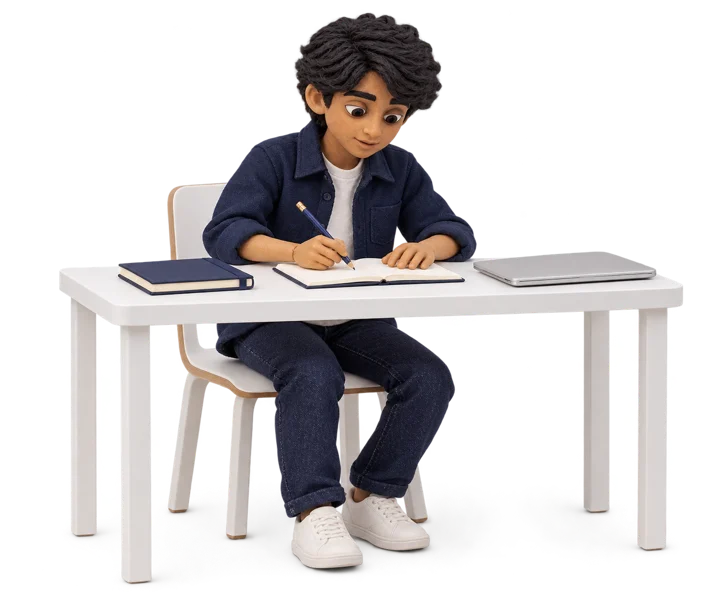
A miniature learner working through a task independently.
These are different things to observe.
See the diagram

Separate finishing from learning

Separate finishing from learningA completed task; A later explanation; A fresh questionHelpHintTryA completed taskA later explanationA fresh question

See it in practice

Make the check fair

Agree on the skill, a suitable question and the supports that remain available. Ask the student to explain in an accessible format.

If the response is difficult, return to the missing idea and adjust the teaching. There is no universal independence score here.

Ask for a little help
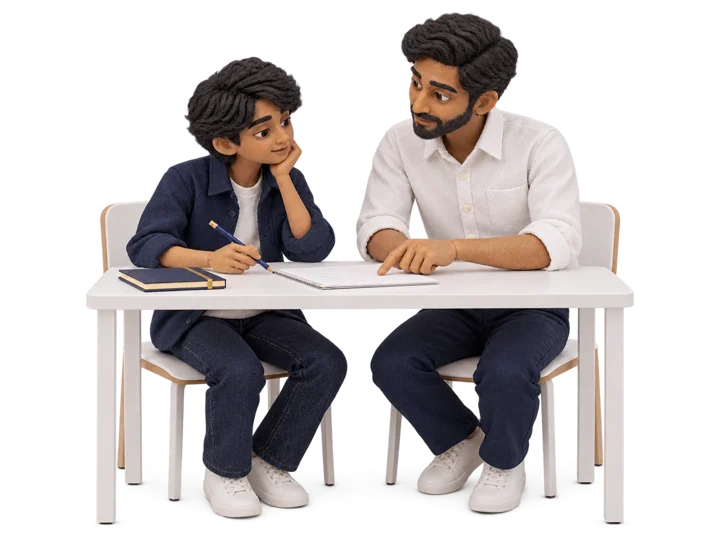
A miniature learner considering a clue.
Change support while keeping the goal clear.
See the diagram

Let answer help step back

Let answer help step backWith explanation; With a small hint; With less answer helpHelpHintTryLess answer-giving supportWith explanationWith a small hintWith less answer help

Use AI thoughtfully

Where AI fits

AI can supply practice material, but the tutor needs to inspect the learner’s reasoning and the suitability of the question.

Adjust your surroundings

A miniature learner adjusting a study space.
Independent work can include appropriate accommodations.
See the diagram

Keep access, reduce answers

Keep access, reduce answersNeeded access tools; No supplied solution; Your own reasoningHelpHintTryKeep needed access toolsNeeded access toolsNo supplied solutionYour own reasoning

Try it today

Try one thing

Choose one idea from a supported session. Revisit it later with a fresh question and less answer-giving assistance. Ask the student to explain their reasoning in an accessible format.

Check against a source

A miniature learner checking study material.
The aim is to understand progress, not catch failure.
See the diagram

Use a fair follow-up

Use a fair follow-upA familiar idea; A different question; An accessible responseHelpHintTryFresh question. Fair check.A familiar ideaA different questionAn accessible response

Check what changed

Look for accurate reasoning across more than one attempt. One good result does not establish mastery, and one difficult day does not erase progress.

Explore 8 more visual examples Optional. Pick the one you need.

Come back to it
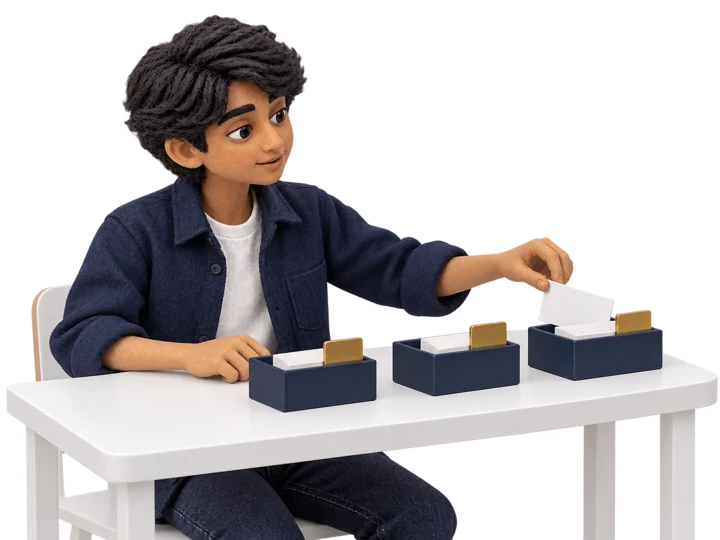
A miniature learner arranging separate review sessions.
Immediate performance is not the only outcome.
See the diagram

Check after the session

Check after the sessionSupported work; A later occasion; What stayed?1Supported work2A later occasion3What stayed?

Explain it in your own words

A miniature learner explaining an idea.
Reasoning can reveal more than correctness alone.
See the diagram

Ask why the step works

Ask why the step worksA final answer; An explanation; A reason you can inspectA final answerAn explanationA reason you can inspect

Try it independently

A miniature learner working through a task independently.
A new example can show whether the idea travels.
See the diagram

Transfer the idea

Transfer the ideaFirst context; One changed feature; Use the connection1First context2One changed feature3Use the connection

Ask for a little help

A miniature learner considering a clue.
A difficulty points back to what needs support.
See the diagram

If the follow-up is hard

If the follow-up is hardNotice the gap; Revisit teaching; Try a smaller stepNotice the gapRevisit teachingTry a smaller step

Make the next step clear

A miniature learner using a short study plan.
A fair check starts with a clear purpose.
See the diagram

Agree what is being checked

Agree what is being checkedThe target skill; Allowed supports; A suitable question1The target skill2Allowed supports3A suitable question

Check against a source

A miniature learner checking study material.
Describe progress rather than inventing a universal threshold.
See the diagram

Track a useful change

Track a useful changePrevious attempt; Current attempt; A specific differencePrevious attemptCurrent attemptA specific difference

Work alongside someone

Two miniature learners working alongside one another.
A tool response is only one part of understanding progress.
See the diagram

Return to human judgement

Return to human judgementAI output; Learner explanation; Tutor interpretation1AI output2Learner explanation3Tutor interpretation

Check against a source

A miniature learner checking study material.
This approach does not prove the programme’s outcomes.
See the diagram

No guarantee from a routine

No guarantee from a routineA useful check; An individual response; Further teaching choicesA useful checkAn individual responseFurther teaching choices

What we know, and what we do not

Evidence and limits

The study gives a reason to distinguish supported performance from later learning. It does not validate this exact monitoring approach, set a universal threshold for independence or prove the programme's outcomes. Appropriate accommodations can remain part of independent work; independence does not mean doing everything without tools.

Sources