Tuned-inSchool
The learning hub

Make studying easier

A little today. Another look later.

The short answer

Return to material on separate occasions. Keep the review small and try recalling before checking. Adjust the next gap to what you remember and when you need it.

Understand

A return visit, not an endless session

Spaced practice separates encounters with the material. The review should include an attempt, not only another look at the answer.

There is no single perfect schedule for every subject, learner or assessment.

Come back to it
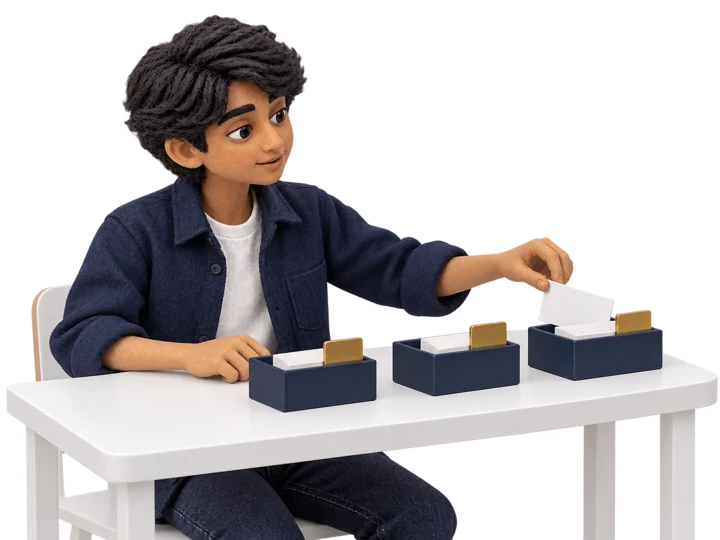
A miniature learner arranging separate review sessions.
Spacing means separate occasions, not endless rereading.
See the diagram

Leave a gap, then return

Leave a gap, then returnLearn the idea; Return later; Retrieve and checkLearnReturnSeparate occasionsA gap between visitsLearn the ideaReturn laterRetrieve and check

See it in practice

Start with three questions

Choose three useful questions from today’s learning. Agree when to revisit them. At the next visit, attempt each before checking.

Notice what was available and what was missing. Use that information to choose the next review.

Make the next step clear
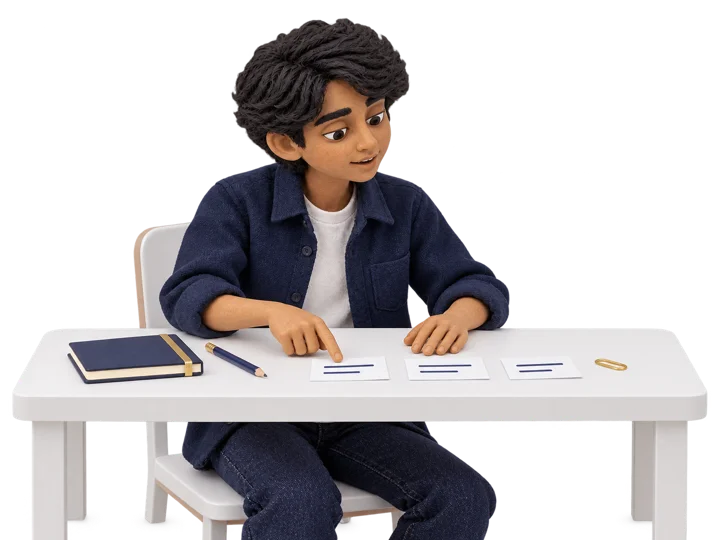
A miniature learner using a short study plan.
Make the first review small enough to use.
See the diagram

A manageable review set

A manageable review setChoose three questions; Agree a return point; Try before checkingLearnReturnSeparate occasionsSmall reviewsChoose three questionsAgree a return pointTry before checking

Use AI thoughtfully

Where AI fits

AI can organise reminders or a proposed schedule. Paper and calendars can also do this; AI scheduling has no automatic advantage.

Try before you look

A miniature learner pausing to recall an idea.
Use the response to inform the next review.
See the diagram

Adjust the next gap

Adjust the next gapEasy recall; Partial recall; Not yet availableLearnReturnSeparate occasionsAdjustEasy recallPartial recallNot yet available

Try it today

Try one thing

Choose three questions from today's learning and decide when you will return to them. At that time, make an attempt before checking the answers. Keep the first review deliberately manageable.

Check against a source

A miniature learner checking study material.
There is no one perfect timetable for everyone.
See the diagram

Keep the schedule flexible

Keep the schedule flexibleWhat do you remember?; When is it needed?; Choose a next reviewLearnReturnSeparate occasionsNo fixed interval shownWhat do you remember?When is it needed?Choose a next review

Check what changed

Notice which ideas remain available after the gap. If nearly everything is forgotten, revisit the explanation and consider a shorter interval. If everything is easy, consider a longer gap or a more demanding application.

Explore 8 more visual examples Optional. Pick the one you need.

Try before you look

A miniature learner pausing to recall an idea.
The review should include something the learner does.
See the diagram

Retrieve, then reread

Retrieve, then rereadAttempt first; Look up the answer; Correct the gap1Attempt first2Look up the answer3Correct the gap

Come back to it

A miniature learner arranging separate review sessions.
Scheduling is not the same as remembering the material.
See the diagram

A calendar supports the habit

A calendar supports the habitA review prompt; A small set of work; Your recall attemptA review promptA small set of workYour recall attempt

Make room for a break

A miniature learner pausing before returning to a task.
A review system should not become another overwhelming task.
See the diagram

Avoid an impossible backlog

Avoid an impossible backlogToo many reviews; Choose a useful subset; Restart manageably1Too many reviews2Choose a useful subset3Restart manageably

Explain it in your own words

A miniature learner explaining an idea.
Revisiting can involve more than repeating the same wording.
See the diagram

Same idea, varied question

Same idea, varied questionA remembered definition; A new example; A useful explanationA remembered definitionA new exampleA useful explanation

Check against a source

A miniature learner checking study material.
Let the response guide what you revisit.
See the diagram

Use feedback for the next visit

Use feedback for the next visitWhat was missing?; What was corrected?; What should return?1What was missing?2What was corrected?3What should return?

Make the next step clear

A miniature learner using a short study plan.
The principle of spacing is not tied to one product.
See the diagram

A reminder tool is optional

A reminder tool is optionalPaper plan; Calendar; AI organiserPaper planCalendarAI organiser

Make the next step clear

A miniature learner using a short study plan.
Fit the plan to the time available.
See the diagram

Before an assessment

Before an assessmentKnowledge needed later; Several possible visits; A realistic plan1Knowledge needed later2Several possible visits3A realistic plan

Check against a source

A miniature learner checking study material.
A specific AI schedule is not automatically evidence-based.
See the diagram

Separate principle from promise

Separate principle from promiseBroad spacing evidence; A suggested routine; Individual adjustmentBroad spacing evidenceA suggested routineIndividual adjustment

What we know, and what we do not

Evidence and limits

The cited synthesis concerns distributed practice in verbal-learning experiments. It supports spacing as a broad principle, not one fixed timetable for all subjects, ages or diagnoses. The suggested routine is an adaptable example. It does not establish that AI scheduling improves retention beyond other ways of organising practice.

Sources