Tuned-inSchool
The learning hub

Learn with AI

Ask for a hint before the answer

The short answer

Make an attempt before asking for help. Name the step that is unclear. A useful hint leaves a decision for you to make.

Understand

Preserve something worth thinking through

A hint can point towards a relationship without completing the answer. Watch what the learner still has to decide.

If another hint does not help, revisit the explanation or use a worked example. Less help is not always better.

Ask for a little help
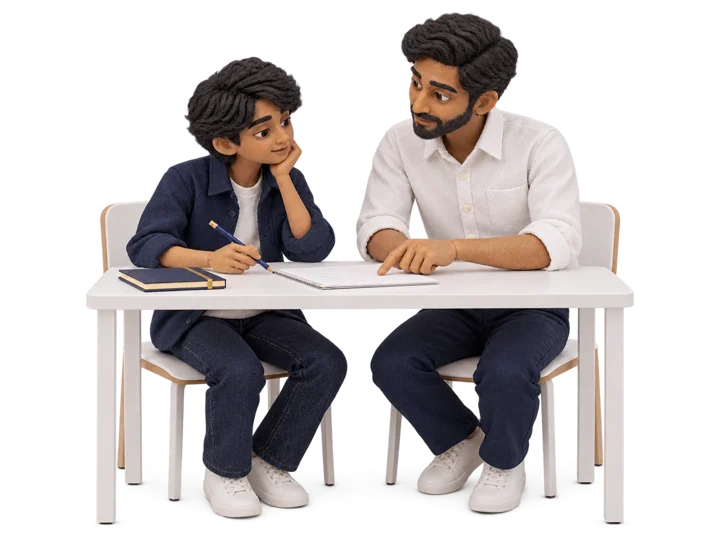
A miniature learner considering a clue.
A hint should preserve useful thinking.
See the diagram

Leave a step for yourself

Leave a step for yourselfMake an attempt; Ask for one hint; Choose the next move1234?Make an attemptAsk for one hintChoose the next move

See it in practice

Use a worked example actively

Read a completed step and explain why it works. Put the example aside. Try a similar question with one feature changed.

That new attempt tells you more than copying the finished line.

Explain it in your own words
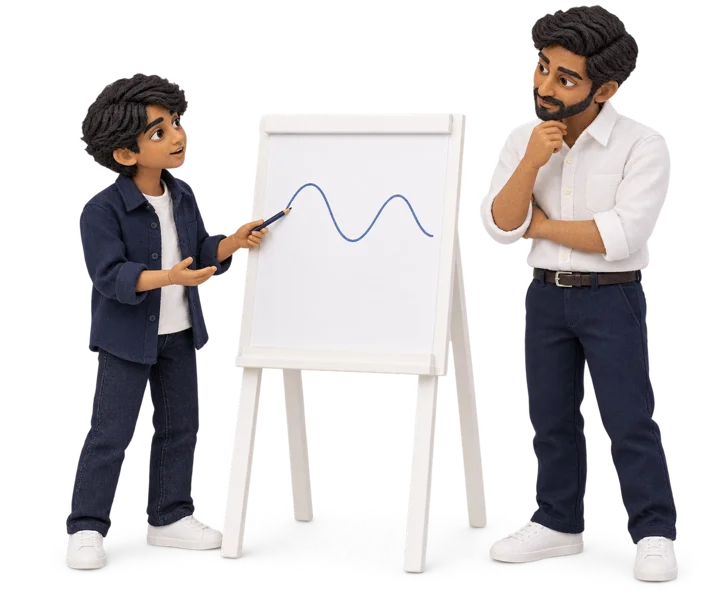
A miniature learner explaining an idea.
A specific difficulty gives help a clearer target.
See the diagram

Show the sticking point

Show the sticking pointHere is my attempt; Here is where I stop; Help with this step1234Here is my attemptHere is my attemptHere is where I stopHelp with this step

Use AI thoughtfully

Where AI fits

Ask AI for one clue and a pause for your attempt. A prompt is not a guarantee that the tool will follow a tested tutoring method.

Make the next step clear
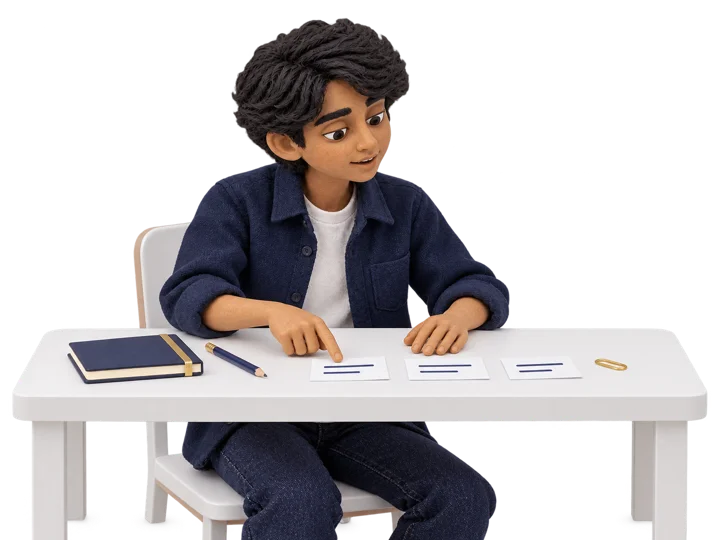
A miniature learner using a short study plan.
Stop adding help when the learner can continue.
See the diagram

Use the smallest useful clue

Use the smallest useful clueA nudge; A next decision; Your next attempt1234One useful clueA nudgeA next decisionYour next attempt

Try it today

Try one thing

For one practice question, show your attempt before asking for help. Request the smallest hint that lets you make the next decision yourself.

Try it independently
A miniature learner working through a task independently.
A complete example can still lead back to practice.
See the diagram

After a worked example

After a worked exampleStudy the reasoning; Put it aside; Try a fresh question1234Try againStudy the reasoningPut it asideTry a fresh question

Check what changed

Try a different question using the same idea. If you need the identical hint again, pause and explain why that step works. If the explanation remains unclear, bring the attempt to a tutor.

Explore 8 more visual examples Optional. Pick the one you need.

Ask for a little help

A miniature learner considering a clue.
Look at what the learner still has to do.
See the diagram

Hint or answer?

Hint or answer?Points to a relationship; Leaves a decision; Does not finish the work1Points to a relationship2Leaves a decision3Does not finish the work

Make the next step clear

A miniature learner using a short study plan.
A prompt describes an intention, not a reliable safeguard.
See the diagram

Request a boundary

Request a boundaryOne clue only; Wait for my attempt; Then respondOne clue onlyWait for my attemptThen respond

Explain it in your own words

A miniature learner explaining an idea.
More hints are not always the right next move.
See the diagram

When a hint is not enough

When a hint is not enoughStill stuck; Revisit the explanation; Choose a smaller step1Still stuck2Revisit the explanation3Choose a smaller step

Explain it in your own words

A miniature learner explaining an idea.
Make the link between clue and action visible.
See the diagram

Explain the next choice

Explain the next choiceRead the hint; Say what it suggests; Try that stepRead the hintSay what it suggestsTry that step

Explain it in your own words

A miniature learner explaining an idea.
Copying alone does not show why a step works.
See the diagram

Avoid copying the worked line

Avoid copying the worked lineA completed line; Your reason for it; A new line you attempt1A completed line2Your reason for it3A new line you attempt

Check against a source

A miniature learner checking study material.
A helpful-sounding clue can still be wrong.
See the diagram

Ask a tutor to inspect

Ask a tutor to inspectAI hint; Course method; Human check if unsureAI hintCourse methodHuman check if unsure

Try it independently

A miniature learner working through a task independently.
The amount of help can change across practice.
See the diagram

Reduce help gradually

Reduce help graduallyWorked example; Partial clue; Fresh attempt1Worked example2Partial clue3Fresh attempt

Check against a source

A miniature learner checking study material.
Do not assume one hint request recreates a tested system.
See the diagram

A chatbot is not the trial tool

A chatbot is not the trial toolA study’s safeguards; Your short prompt; Different conditionsA study’s safeguardsYour short promptDifferent conditions

What we know, and what we do not

Evidence and limits

The cited trial tested specific tools in high-school mathematics. A short prompt in a general chatbot does not recreate its safeguards. The attempt-and-hint routine here is a suggested learning practice, not proof of a particular AI product's effectiveness or reliability.

Sources