
Tuned-inSchool
The learning hub

Learn with AI

AI can carry the checklist. You still do the thinking.

The short answer

Let a tool hold reminders and organise practice. Keep the explanation, reasoning and recall with the learner. A polished answer is not a learning outcome.

Understand

Split the work deliberately

Cognitive offloading uses something outside the mind to carry part of a task. The important question is which part.

A reminder can help you return to practice. A supplied solution can remove the reasoning you meant to practise.

Make the next step clear
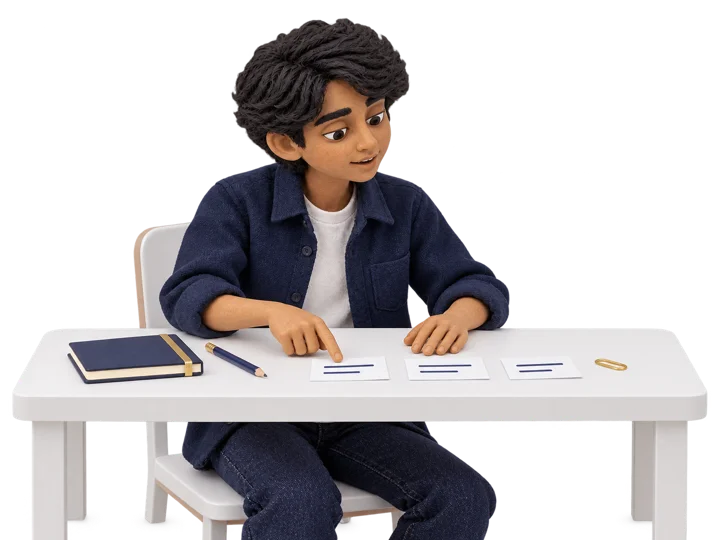
A miniature learner using a short study plan.
Protect the skill you are trying to learn.
See the diagram

Offload the surrounding work

Offload the surrounding workReminders outside; Reasoning inside; An unaided checkToolLearner?RemindersReasoningReminders outsideReasoning insideAn unaided check

See it in practice

Keep one part yours

Before opening AI, name the skill: “I need to explain why this happens.” Let the tool organise the examples or questions.

Then close the answer and explain the idea. Revisit it later with a fresh question.

Explain it in your own words
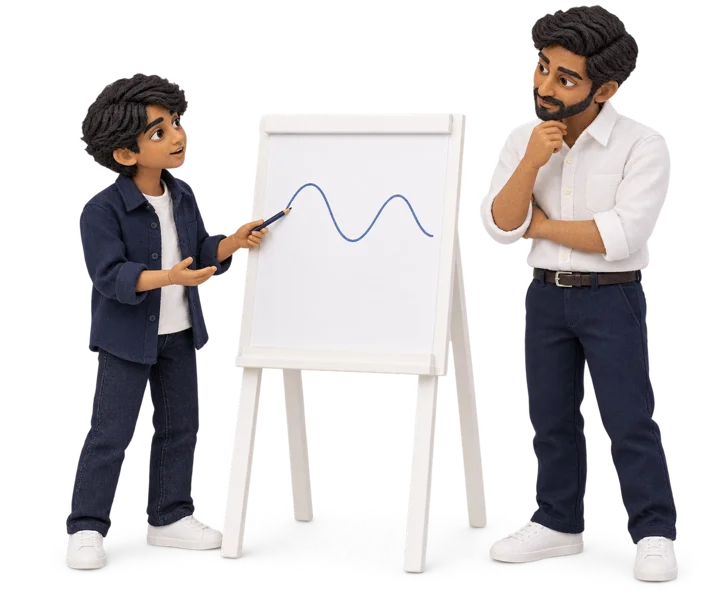
A miniature learner explaining an idea.
Choose which part the tool should carry.
See the diagram

Split the task on purpose

Split the task on purposeOrganise practice; Explain the idea; Recall it laterToolLearner?OrganiseExplainOrganise practiceExplain the ideaRecall it later

Use AI thoughtfully

Where AI fits

Use AI for the surrounding structure while keeping the learning action visible. This does not establish long-term benefit by itself.

Come back to it
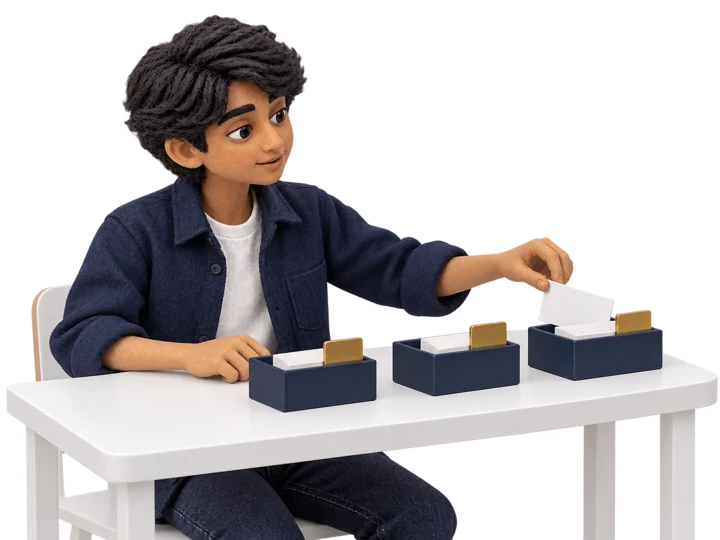
A miniature learner arranging separate review sessions.
The output and the learning are different things.
See the diagram

Polish is not learning

Polish is not learningA fluent AI answer; Your own explanation; A fresh attemptToolLearner?Polished outputYour explanationA fluent AI answerYour own explanationA fresh attempt

Try it today

Try one thing

Before opening AI, finish this sentence: “The part I need to practise myself is…” Ask the assistant to support the surrounding task while leaving that part to you.

Try it independently

A miniature learner working through a task independently.
Decide before opening the assistant.
See the diagram

Name the protected skill

Name the protected skillWhat must I practise?; What can AI support?; How will I check?ToolLearner?SupportPractiseWhat must I practise?What can AI support?How will I check?

Check what changed

Check the skill later with a fresh question. Keep needed accessibility supports, such as a readable layout or extra processing time. Reduce answer-giving help, rather than removing everything that makes the task accessible.

Explore 8 more visual examples Optional. Pick the one you need.

Come back to it

A miniature learner arranging separate review sessions.
Remembering when to practise is different from practising.
See the diagram

A reminder is useful offloading

A reminder is useful offloadingA review to remember; An external reminder; You do the review1A review to remember2An external reminder3You do the review

Try it independently

A miniature learner working through a task independently.
Watch for the part of the task that disappeared.
See the diagram

An answer can remove practice

An answer can remove practiceA question to solve; AI gives the solution; No reasoning attemptedA question to solveAI gives the solutionNo reasoning attempted

Explain it in your own words

A miniature learner explaining an idea.
Use the tool response as material to work with.
See the diagram

Keep the explanation yours

Keep the explanation yoursRead an explanation; Close it; Explain in your words1Read an explanation2Close it3Explain in your words

Make the next step clear

A miniature learner using a short study plan.
A clear division of work is easier to review.
See the diagram

An organisation boundary

An organisation boundaryAI makes a checklist; You work the problem; You check the reasoningAI makes a checklistYou work the problemYou check the reasoning

Come back to it

A miniature learner arranging separate review sessions.
Immediate fluency is not the only useful measure.
See the diagram

A later check

A later checkSupported session; A gap in time; Try without answer help1Supported session2A gap in time3Try without answer help

Try it independently

A miniature learner working through a task independently.
Check whether the idea transfers beyond the first answer.
See the diagram

A new example

A new exampleFamiliar problem; One feature changes; Apply the same ideaFamiliar problemOne feature changesApply the same idea

Adjust your surroundings

A miniature learner adjusting a study space.
Independence does not require removing every tool.
See the diagram

Keep access supports

Keep access supportsRemove supplied answers; Keep needed access tools; Check the skill fairly1Remove supplied answers2Keep needed access tools3Check the skill fairly

Check against a source

A miniature learner checking study material.
AI offloading has not been shown here to improve every learner’s long-term outcomes.
See the diagram

What evidence does not promise

What evidence does not promiseSpecific study findings; Different learners; Long-term uncertaintySpecific study findingsDifferent learnersLong-term uncertainty

What we know, and what we do not

Evidence and limits

A high-school mathematics trial found that unguarded AI could improve supported performance while harming subsequent performance without it. Bastani and colleagues This supports checking independent learning. It does not establish long-term benefits for AI offloading in neurodivergent students or prove the routine above.

Sources