
Understand your learning
When the instruction disappears halfway through
The short answer
Understanding an instruction and remembering all its steps are different demands. Keep the sequence visible so the learner can return to it.
- Write the sequence down.
- Keep the thinking with the learner.
- Check that the steps make sense.
Understand
Do not hide a memory test inside the work
A learner may understand the subject but lose part of a long instruction. Repeating the whole sequence can still leave that demand in place.
Put the steps beside the task and make them easy to revisit.
Make the next step clear

See the diagram
Put the steps where they stay
See it in practice
Three visible steps
Read the question. Mark the useful details. Make an attempt.
Ask where the learner will begin. Let them look back at the sequence without treating that as failure. The checklist supports the process; it does not supply the reasoning.
Try before you look

See the diagram
Three visible steps
Use AI thoughtfully
Where AI fits
AI can shorten a long instruction into a draft checklist. Check that no important condition has disappeared.
Make a small start

See the diagram
Separate two demands
Try it today
Try one thing
Write the next task as three visible steps. Ask the learner to show where they will begin and keep the steps available until the task is finished.
Check against a source

See the diagram
Check the starting point
Check what changed
Notice whether the student returns to the task more easily after an interruption. Ask whether the list is useful or whether its wording needs changing. More boxes are not automatically better.
Explore 8 more visual examples Optional. Pick the one you need.
Make the next step clear
See the diagram
A step can be revisited
Make the next step clear
See the diagram
Reduce competing instructions
Make the next step clear
See the diagram
A useful worked process
Try it independently

See the diagram
A checklist is not an answer
Ask for a little help

See the diagram
Let the learner edit
Check against a source
See the diagram
Use AI for structure
Explain it in your own words
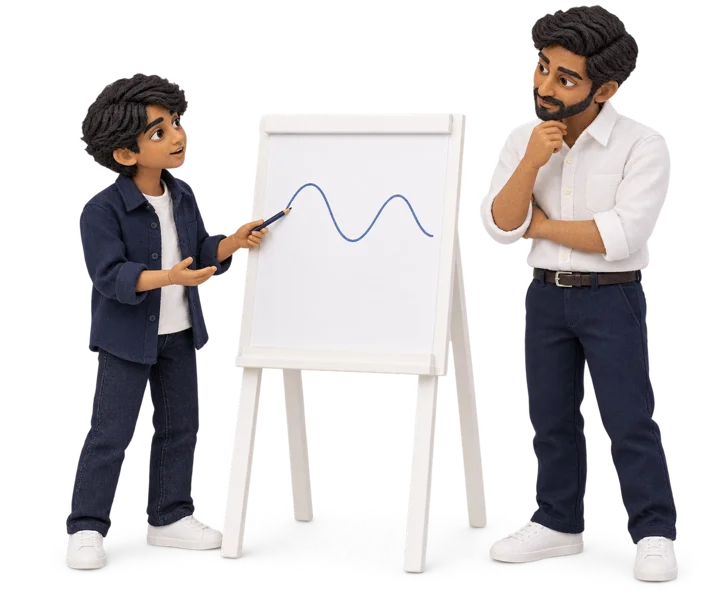
See the diagram
Review the support
Check against a source
See the diagram
Keep the claim modest
What we know, and what we do not
Evidence and limits
The meta-analysis concerns working-memory task performance. It does not directly test this checklist or show that checklists improve every academic outcome. This example is a low-cost teaching adjustment to evaluate with the student, not a diagnosis or memory-training treatment.