Tuned-inSchool
The learning hub

Make studying easier

Change the study space, one thing at a time

The short answer

Before redesigning the study room, change one thing. Ask about light, noise, notifications or interruptions. Compare the experience with the learner.

Understand

The difficulty may include the setting

A distracting or uncomfortable room can be part of the problem. There is no single ideal setup for every neurodivergent learner.

Start with what the student notices, rather than a shopping list of equipment.

Adjust your surroundings
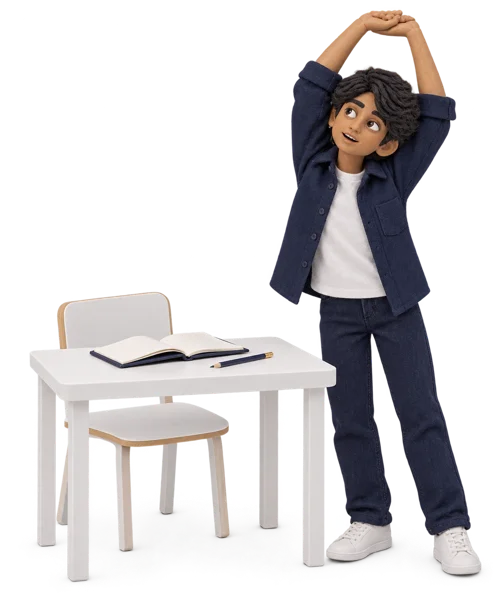
A miniature learner adjusting a study space.
One change makes it easier to tell what helped.
See the diagram

Change one part of the room

Change one part of the roomNotice a difficulty; Change one feature; Compare the experienceNotice a difficultyChange one featureCompare the experience

See it in practice

A small, reversible experiment

Move a glaring light, mute nonessential notifications or try another seat. Keep the task manageable.

Ask what felt different and whether the change helped with the work. Undo it if it did not.

Make room for a break
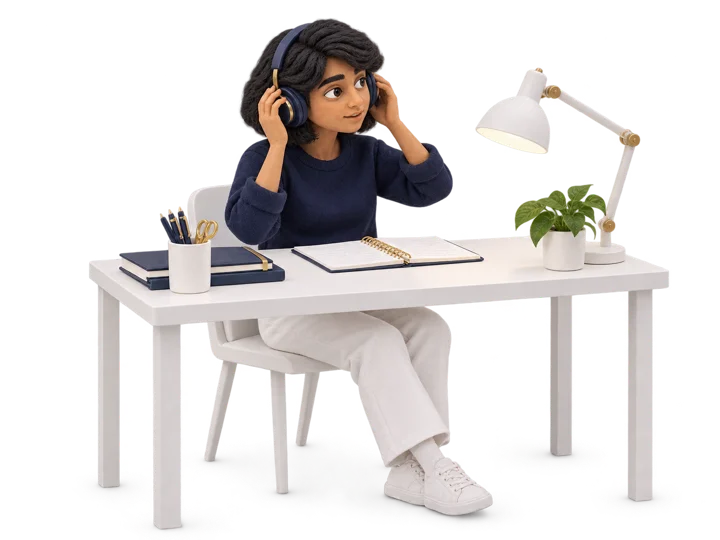
A miniature learner pausing before returning to a task.
Ask which part of the setting is uncomfortable or distracting.
See the diagram

Look beyond the desk

Look beyond the deskLight; Sound; Interruptions!LightSoundInterruptions

Use AI thoughtfully

Where AI fits

AI can help organise a short comparison note. The learner’s actual experience matters more than a generated room plan.

Make the next step clear
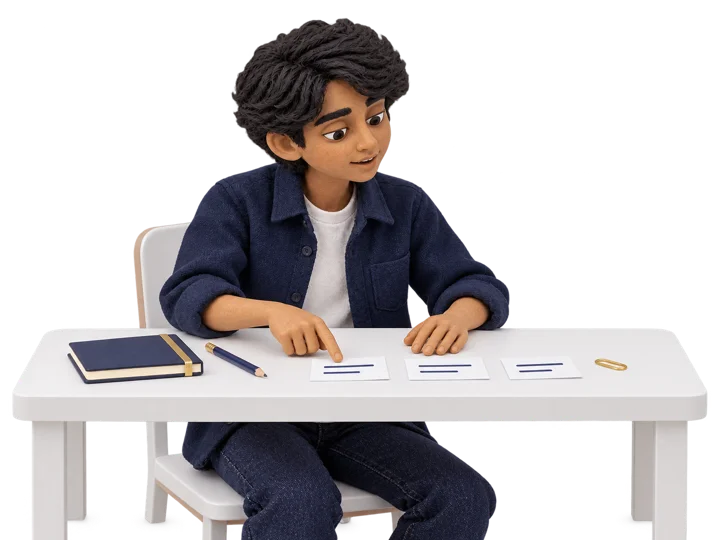
A miniature learner using a short study plan.
An expensive room redesign is not the first experiment.
See the diagram

Try before buying

Try before buyingA suspected obstacle; A small adjustment; Learner feedbackA suspected obstacleA small adjustmentLearner feedback

Try it today

Try one thing

Choose one suspected obstacle today. Move the light, mute nonessential notifications or change the seat. Ask whether the change helped before buying equipment or redesigning the room.

Try it independently
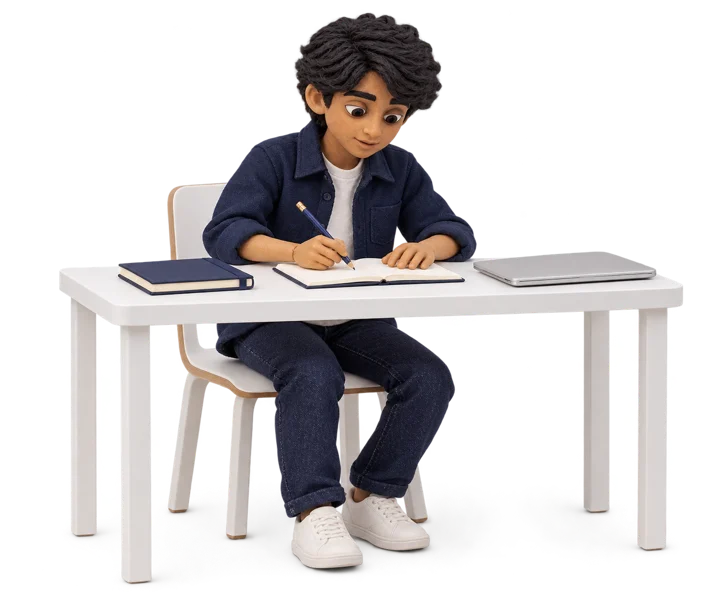
A miniature learner working through a task independently.
A room preference is not an academic outcome on its own.
See the diagram

Check the effect

Check the effectSame small task; Adjusted setting; Ask and observeOne changeSame small taskAdjusted settingAsk and observe

Check what changed

Check comfort as well as completion. Did the student need to reread less, lose their place less often or feel less strained? A task finished under pressure does not automatically mean the environment suited them.

Explore 8 more visual examples Optional. Pick the one you need.

Adjust your surroundings

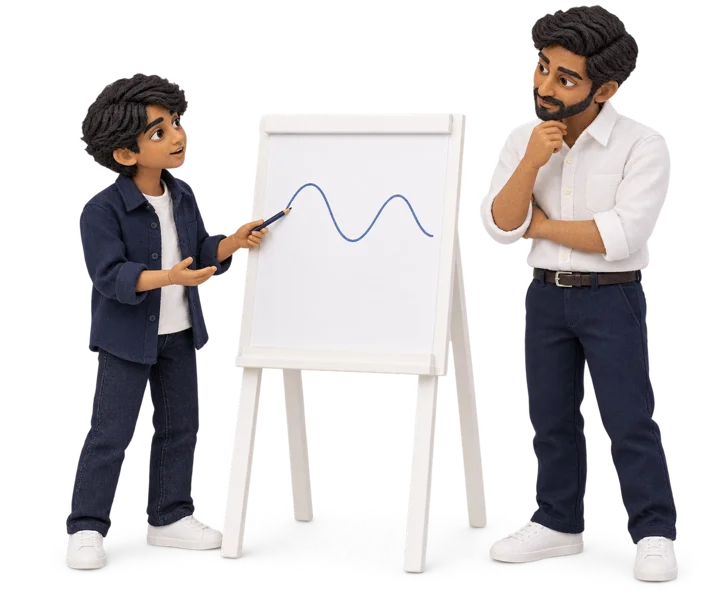
A miniature learner adjusting a study space.
Let the learner describe what feels different.
See the diagram

Light experiment

Light experimentNotice glare; Move the light; Check comfort1Notice glare2Move the light3Check comfort

Adjust your surroundings

A miniature learner adjusting a study space.
Preserve needed access while reducing avoidable interruptions.
See the diagram

Notification experiment

Notification experimentNonessential alerts; Mute during one task; Compare interruptionsNonessential alertsMute during one taskCompare interruptions

Adjust your surroundings

A miniature learner adjusting a study space.
A different seat is a reversible change.
See the diagram

Seat experiment

Seat experimentCurrent place; Another position; Ask which helps1Current place2Another position3Ask which helps

Adjust your surroundings

A miniature learner adjusting a study space.
Do not assume the same sound setting helps everyone.
See the diagram

Sound experiment

Sound experimentWhat is distracting?; Agree one change; Try the task againWhat is distracting?Agree one changeTry the task again

Make the next step clear

A miniature learner using a short study plan.
The arrangement should make this task easier to find.
See the diagram

Clear the next action

Clear the next actionCurrent task visible; Other materials aside; Needed tools nearby1Current task visible2Other materials aside3Needed tools nearby

Make the next step clear

A miniature learner using a short study plan.
A simple record can help with the next decision.
See the diagram

Keep a short note

Keep a short noteWhat changed?; What felt different?; Keep or undo?What changed?What felt different?Keep or undo?

Explain it in your own words

A miniature learner explaining an idea.
Check the learning as well as the setting.
See the diagram

Comfort and learning

Comfort and learningFeels more comfortable; Can begin the task; Can explain the work1Feels more comfortable2Can begin the task3Can explain the work

Check against a source

A miniature learner checking study material.
A particular setup is not a treatment or a promise of marks.
See the diagram

No universal perfect room

No universal perfect roomDifferent learners; Different tasks; Individual adjustmentsDifferent learnersDifferent tasksIndividual adjustments

What we know, and what we do not

Evidence and limits

The cited guidelines support individual environmental consideration. They do not establish that a particular desk setup improves grades, or that environmental changes replace other support. The one-change comparison is a practical way to explore a preference, not a clinical assessment.

Sources