Tuned-inSchool
The learning hub

Understand your learning

Why wanting to study is not always enough

The short answer

Wanting to do well and being able to start are different things. Make the first action clear, the finish point visible and the next decision small.

Understand

Make the entrance smaller

“Revise science” hides several decisions. Which topic? Which page? What counts as enough?

Replace it with an action the learner can see themselves doing. Keep the purpose meaningful.

Make a small start

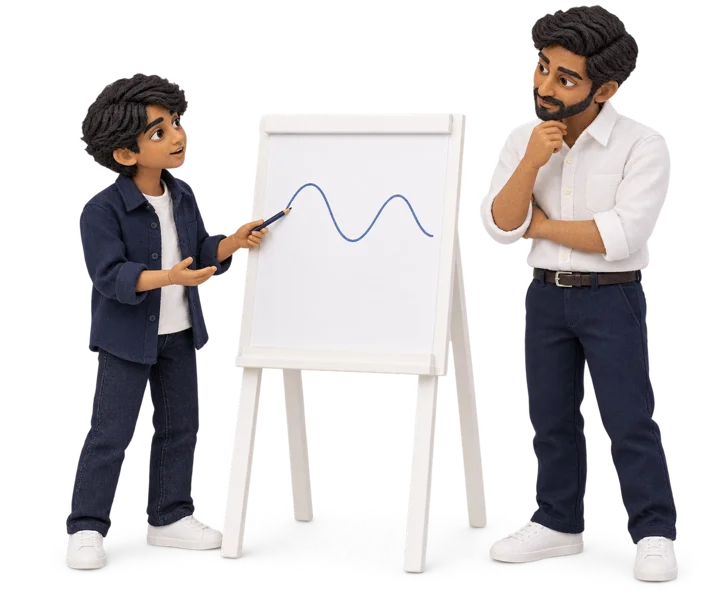
A miniature learner beginning a small study task.
A clear action makes a vague goal usable.
See the diagram

Turn intention into a first step

Turn intention into a first stepI want to revise; Open one diagram; Label the batteryToo many decisionsOne actionI want to reviseOpen one diagramLabel the battery

See it in practice

A history task you can start

Read one paragraph. Name two things that changed after the event. Check the answer.

This does not finish the chapter. It gives the learner a useful starting point and a visible endpoint.

Make the next step clear
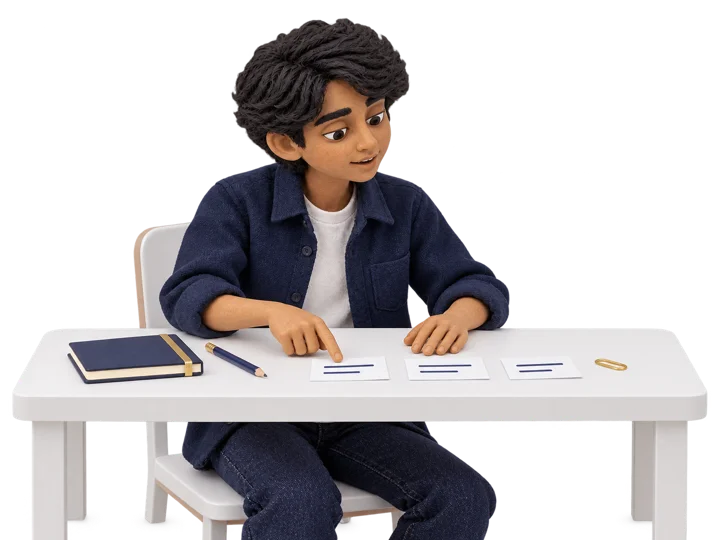
A miniature learner using a short study plan.
A finish point does not need to mean finishing everything.
See the diagram

Give the task an edge

Give the task an edgeOne question; A visible finish; A next choiceStartFinishOne question has an endOne questionA visible finishA next choice

Use AI thoughtfully

Where AI fits

AI can suggest a shorter sequence. The learner should be able to reject a plan that feels unrealistic.

Ask for a little help
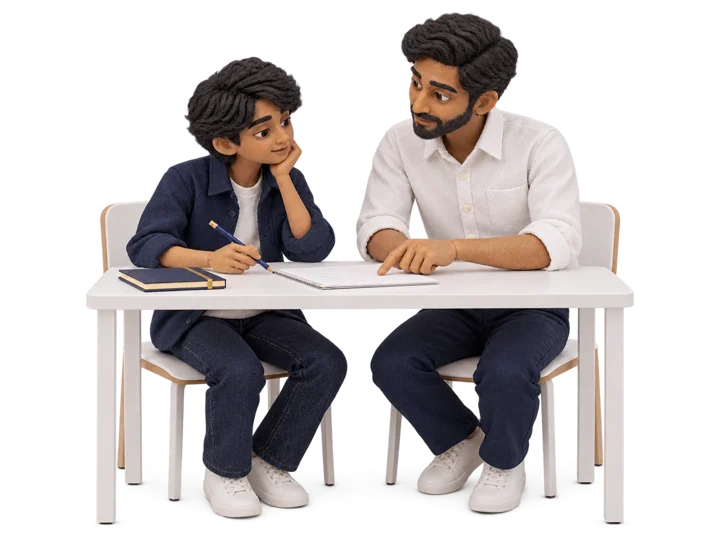
A miniature learner considering a clue.
Keep the academic purpose while reducing setup decisions.
See the diagram

Shrink the instruction

Shrink the instructionRevise history; Read one paragraph; Name two changesStartFinishReadSay two ideasRevise historyRead one paragraphName two changes

Try it today

Try one thing

Replace today's vaguest instruction with one action that begins with a verb and ends with a visible result. For example: “Draw one labelled circuit.” Agree what comes after it, including a break if needed.

Make room for a break
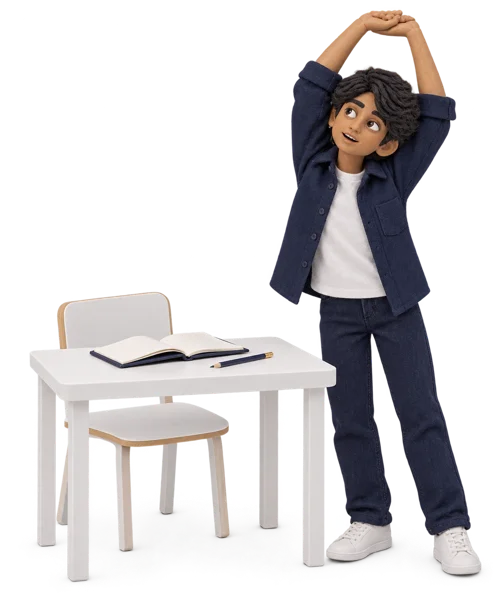
A miniature learner pausing before returning to a task.
Difficulty starting is a question to explore.
See the diagram

Check the obstacle

Check the obstacleHard to start?; Ask what is unclear; Change one thingStartFinish?Hard to start?Ask what is unclearChange one thing

Check what changed

Ask whether starting required fewer reminders and whether the student understood the task. A quick start followed by confusion is a sign to improve the instruction, not simply increase the reward.

Explore 8 more visual examples Optional. Pick the one you need.

Make a small start

A miniature learner beginning a small study task.
Use a verb that leads to an observable result.
See the diagram

Replace a vague verb

Replace a vague verbStudy science; Draw a circuit; Explain the loop1Study science2Draw a circuit3Explain the loop

Make the next step clear

A miniature learner using a short study plan.
An agreed endpoint can make a task easier to enter.
See the diagram

Make the finish visible

Make the finish visibleChoose one paragraph; Say two key points; Check and stopChoose one paragraphSay two key pointsCheck and stop

Ask for a little help

A miniature learner considering a clue.
Feedback should help the learner know what to do.
See the diagram

Useful feedback

Useful feedbackMake an attempt; Check the answer; Choose the next action1Make an attempt2Check the answer3Choose the next action

Check against a source

A miniature learner checking study material.
An instant plan can still be unrealistic.
See the diagram

AI plan reality check

AI plan reality checkA generated plan; Student chooses a step; Tutor checks the demandA generated planStudent chooses a stepTutor checks the demand

Explain it in your own words

A miniature learner explaining an idea.
Speed alone does not tell us whether learning improved.
See the diagram

A start is not the whole goal

A start is not the whole goalStart quickly; Understand the task; Complete a useful attempt1Start quickly2Understand the task3Complete a useful attempt

Ask for a little help

A miniature learner considering a clue.
Repeated reminders may leave the actual difficulty untouched.
See the diagram

Ask before adding pressure

Ask before adding pressureStill not starting; Ask about the obstacle; Rework the instructionStill not startingAsk about the obstacleRework the instruction

Make room for a break

A miniature learner pausing before returning to a task.
Include the break in the plan when needed.
See the diagram

Leave space for a break

Leave space for a breakOne small task; Agreed pause; A clear return point1One small task2Agreed pause3A clear return point

Check against a source

A miniature learner checking study material.
One reward explanation cannot describe everyone with ADHD.
See the diagram

No single motivation rule

No single motivation ruleDifferent students; Different tasks; Different responsesDifferent studentsDifferent tasksDifferent responses

What we know, and what we do not

Evidence and limits

The review concerns experimental learning from reinforcement. It does not validate this exact study routine, identify the cause of an individual student's difficulty or promise better marks. Clear first steps are a practical approach to test and adjust together.

Sources